

Architectures of Meaning
The Stories That Shape Us

There are conversations that begin with carefully prepared questions, and there are conversations that start with heartfelt laughter and seem to arrive from much older places, as though they have been quietly waiting for years beneath the surface of ordinary life. My recent *Roots of Enlivenment* dialogue with Lee Rael belonged entirely to the latter category. Although we had gathered to speak about storytelling, narrative, imagination, and the ways stories shape culture and perception, what unfolded felt far less like an interview and far more like two people tracing the invisible pathways through which stories become woven into a life.
When Lee appeared on my screen from Cape Town, wrapped in a winter jacket and woollen hat during the cool season of the southern hemisphere, what struck me first was neither his professional background nor the many years he has spent working with stories and regenerative narratives. What immediately reached across the distance between Switzerland and Southern Africa was a particular warmth, a gentleness in his voice, a quiet curiosity that seemed to invite the conversation to unfold at its own pace. Before we entered any of the themes we had imagined discussing, I found myself speaking about a story that has accompanied me for almost as long as I can remember.
That story was Heidi.
Growing up in Switzerland, it is easy to overlook the influence of Heidi because she is so deeply embedded within the cultural landscape. Her presence appears everywhere, woven into childhood, tourism, collective memory, and national identity, often to such an extent that one forgets to ask what lives beneath the story itself. Yet as I began speaking about her, I realised that Heidi may have shaped me more profoundly than I had ever fully understood.
At its heart, Heidi is the story of an orphaned child sent to live with her grandfather in the Swiss Alps. Yet to reduce the story to its plot would be to miss its deeper invitation. The Alps themselves become a character within the narrative, perhaps even the central character. For those who have never spent extended time in the mountains, it is difficult to describe how profoundly they shape perception. Life unfolds differently there: The seasons announce themselves with authority, weather cannot be ignored, distance is measured not only in kilometres but in elevation, effort, and patience. Animals remain close companions to daily life. The mountains are never merely a backdrop, they become teachers, witnesses, and living presences that accompany human existence.
Within this landscape Heidi discovers a form of belonging that emerges not through ownership or achievement but through relationship. She learns the language of goats and meadows, of forests and storms, of changing seasons and mountain silence. She softens the heart of her grandfather not through argument but through presence. Her intelligence is relational rather than strategic as her wisdom arises from participation rather than control.
As we spoke, I found myself recognising how much of my own life continues to circle around similar questions:
What does it mean to belong to a place deeply enough that it begins to shape your character? What happens when animals become companions rather than resources? What forms of knowing become available when one learns to listen to landscapes rather than merely moving across them?
From the mountains of Switzerland another landscape slowly emerged.
Even though I never travelled to Southern Africa myself, the region already occupied a vivid place within my imagination through the stories of my grandfather. He had travelled extensively through Southern Africa, including the Kalahari learning with and from the Bushman People, and many of my most treasured childhood memories are connected to the evenings spent listening to him recount those journeys. His home carried traces of these travels everywhere. There were objects gathered over decades, fragments of distant places, reminders of encounters and friendships that stretched across continents. Yet it was never the objects themselves that captivated me most deeply: It was the stories.
Again and again he would tell me about the vastness of the Kalahari, about nights beneath immense skies, about encounters with people whose lives remained intimately woven into the rhythms of the land. As a child, I listened with complete fascination to stories of tracking animals, reading landscapes, following weather patterns, listening to silence, and inhabiting a world where human life still unfolded within direct relationship to the living earth.
Bedtime became something I anticipated with almost sacred excitement because each evening offered another journey into those worlds. Looking back now, I can see that what moved me was not simply the sense of adventure. Beneath these stories was an entirely different possibility of being human. They carried the suggestion that life could be lived in conversation with animals, seasons, fire, stars, and mystery itself. They revealed forms of belonging that modern culture often struggles to recognise.
Perhaps this is why speaking with Lee felt strangely familiar from the very beginning.
Although our lives had unfolded on different continents and within different cultural landscapes, we seemed to recognise similar territories within one another. When I shared the story of Heidi, Lee responded with Peter Pan, a story that had accompanied him throughout much of his own life. Listening to him speak, it became clear that Peter Pan represented far more than a beloved childhood character. The story carried a lifelong invitation toward exploration, wonder, curiosity, and the willingness to move beyond the boundaries of what is already known.
From there our conversation began weaving itself through the landscapes of imagination, education, creativity, and storytelling. We reflected upon Waldorf education and its deep respect for fantasy as a formative force in human development. We explored the thresholds that stories help us cross throughout life, not only during childhood but across every stage of becoming. We spoke about the role of imagination in shaping perception and about the subtle ways stories influence what we believe is possible.
As the conversation unfolded, another storyteller gradually entered the room:
Astrid Lindgren.
Her books had accompanied my childhood almost as faithfully as Heidi had. Pippi Longstocking, with her fierce independence, irrepressible freedom, generosity, courage, and refusal to conform to conventions that made little sense, offered an entirely different image of what it might mean to grow up. Karlsson-on-the-Roof floated mischievously above the predictable structures of everyday life, reminding readers that reality is often stranger, funnier, and more enchanted than adults are willing to admit.
Reflecting upon these stories together, I began noticing a thread running quietly through all of them. Whether in the alpine meadows of Heidi, the vast horizons of the Kalahari, the adventures of Peter Pan, or the wonderfully unconventional worlds created by Astrid Lindgren, none of these stories seemed particularly interested in power, control, optimisation, or mastery.
Instead they opened doorways into relationship, wonder, curiosity, participation, and belonging. They invited readers into living worlds rather than abstract systems. They encouraged trust in imagination as a legitimate way of knowing and they suggested that mystery is not something to be solved but something to be entered.
What emerged between Lee and me was therefore not simply a conversation about storytelling.
It became an exploration of the stories that quietly continue shaping us long after childhood has ended, stories that influence how we perceive the world, how we understand belonging, how we approach uncertainty, and how we navigate the countless thresholds that life inevitably places before us.
As the conversation drew to a close, storytelling revealed itself not as a communication technique, a branding strategy, or even a cultural product, but as something much older and more enduring. Stories appeared as living vessels through which meaning travels across generations, carrying wisdom, memory, imagination, and possibility from one life into another.
They became a form of fire, carefully tended and continuously renewed, illuminating paths that might otherwise remain hidden.
What stayed with me most strongly after our dialogue was the growing sense that stories are never entirely ours. We inherit them, inhabit them, reshape them, and pass them onward, yet they also shape us in return, quietly influencing who we become and how we learn to meet the world.
Perhaps this is why some stories remain with us for a lifetime.
Not because we remember them, but because they continue remembering something within us.
If you like to find out more, meet Lee on his platform:
https://www.wearesource.earth/
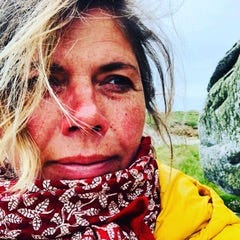
or follow Cordula on her Substack:
Parallax is supported by readers and members who participate in the Parallax Academy, a space for deeper exploration of philosophy, media, myth, and culture.
Free Subscribers
• Receive selected public essays and podcast excerpts
• Stay informed about Parallax events and conversations
Members — €12/month
• Full access to Parallax articles and essays
• Participation in Parallax groups and community sessions
• Access to member discussions and the growing Parallax archive
Parallax Academy Members — €500/year
• Everything included in Member access
• Full access to all Parallax Course Library + Bonus Live Courses
• Invitations to academy salons, dialogues, and special gatherings
Subscribe to join the Parallax community and Parallax Academy.
https://www.parallax-media.com/the-parallax-academy